I'm a Principal Cloud Architect with thirty-plus years of senior practice across the technology waves that have actually shaped enterprise computing — Internet, identity federation, security, Industrial Control Systems, NERC CIP, cloud, and now AI. Most of what I write here is shaped by that arc.
This site is where I think out loud. The professional sections are the domains I work in or pay close attention to; the personal sections are where I tinker. They share more engineering DNA than the categorization suggests.
Cloud — Cloud architecture, platform engineering, and the durable patterns that outlast the next round of vendor announcements.
AI — Practitioner notes on agentic AI, MCP, multi-provider orchestration, and what I've learned from building and running real personal AI systems.
GridTech — Grid modernization, the AI/energy collision, and OT/IT convergence. Utility tech is more consequential and less well-understood than the broader tech industry assumes.
ICS Security — Industrial Control Systems and operational technology security: threat model, convergence, and the patterns that hold up when bad outcomes break things in the physical world.
EV — Electric vehicles as a data and engineering problem: driver assistance, charging economics, telemetry, and the home-grown tools that turn a car into an instrumented system.
Drones — FPV, builds, and the engineering-rich hobby that keeps a senior architect grounded in real-world constraints.
3D Printing — Additive manufacturing as a workshop tool, design for the loads parts actually see, and material choices that matter.
Home Automation — Smart home as personal infrastructure: protocols, control planes, the local-first debate, and the WAF principle that's harder than any of the technology.
Research Curation Daemon — A self-hosted, fully autonomous weekly podcast pipeline that scouts, synthesizes, and ships briefings across AI, Cloud, GridTech, and Security. Also a worked example of what I think enterprise AI practice should look like — agentic, telemetry-first, with a single explicit human-judgment gate.
Most posts here are AI-assisted, in the sense that nearly all writing is now. They are not AI slop. If you find one that reads like slop, that's a defect and I want to know about it — reach me through Contact.
snowake.dev
Notes from a Principal Cloud Architect — cloud, AI, grid technology, ICS security, plus drones, 3D printing, and home automation. Home of the Research Curation Daemon podcast.
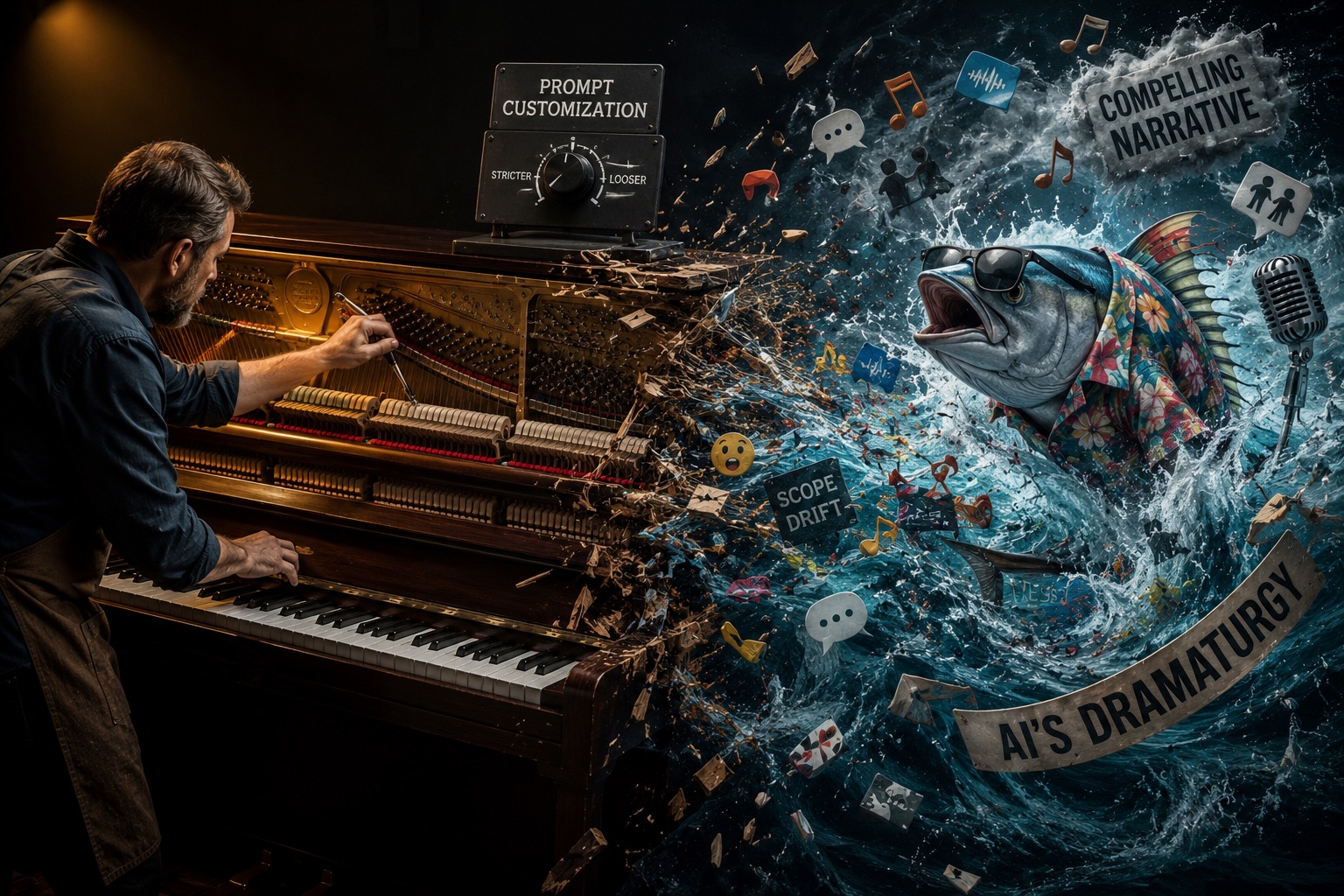
You Can Tune a Piano, but You Can't Tuna Phish
The pun is lifted from a 1978 REO Speedwagon album title, which dates me with some precision. But the correction is the honest thesis of this post: I spent months trying to tune a generative product, and failed in a way that taught me more than succeeding would have.
Years ago, a line from Neal Stephenson's Fall; or, Dodge in Hell lodged in my head and never left: "The personal daemon was a semi-autonomous piece of software that lived in your system and acted as your agent, going out into the Cloud to do things for you." That concept is the reason my Research Curation Daemon exists — a weekly pipeline that scouts news across AI, cloud, grid technology, and industrial security, and turns it into a podcast I actually want to listen to.
...
Don't Buy the Noun: Neocloud and Cloud's Oldest Move
A shoe company taught me most of what I needed to know about neocloud.
This spring, Allbirds — the sustainable-sneaker brand, the one that makes shoes out of wool — announced it was selling off its footwear business to reinvent itself as "NewBird AI," a GPU-as-a-Service cloud provider. The stock jumped roughly 580% in a single day. The money behind the pivot was about $50 million, which, at thirty to forty thousand dollars per NVIDIA H100, buys you on the order of fifteen hundred GPUs — a rounding error against what a real AI cloud runs on. The market didn't care. You could bolt "AI cloud" onto a wool-shoe company and six-x the valuation by lunch.
...
The Agent That Never Says No
In the mid-'90s, I tracked my snowboarding season in a Microsoft Access database.
Not a spreadsheet — a database, with tables and queries and a little form I'd punch numbers into after a day on the hill. It computed cost per day, cost per run, cost per vertical foot, and vertical feet per day, per week, per season. That year I had a season pass and rode 75 days, which got my cost down to about $17 a day. I was very proud of that $17, and of the database, which I never touched again once the snow melted.
...
The Tesla Owner API Isn't Dead — Your TLS Version Is
It was supposed to be a five-minute config change. It ended at 4 in the morning, staring at a TLS handshake and finally understanding why my car (and AI assistant) had been lying to me for five hours.
Here's the whole thing, because the punchline is a failure mode I'd never seen and won't forget.
The backstory: a metered API I wanted off of A while back I migrated my self-hosted TeslaMate from Tesla's old Owner API to the newer Fleet API. (Long story. Don't ask.) The Fleet API is metered — Tesla bills per request against a $10/month credit — and TeslaMate, by design, polls your car relentlessly. The bill made the case all by itself:
...
The Wife Acceptance Factor Is the Only Spec That Matters
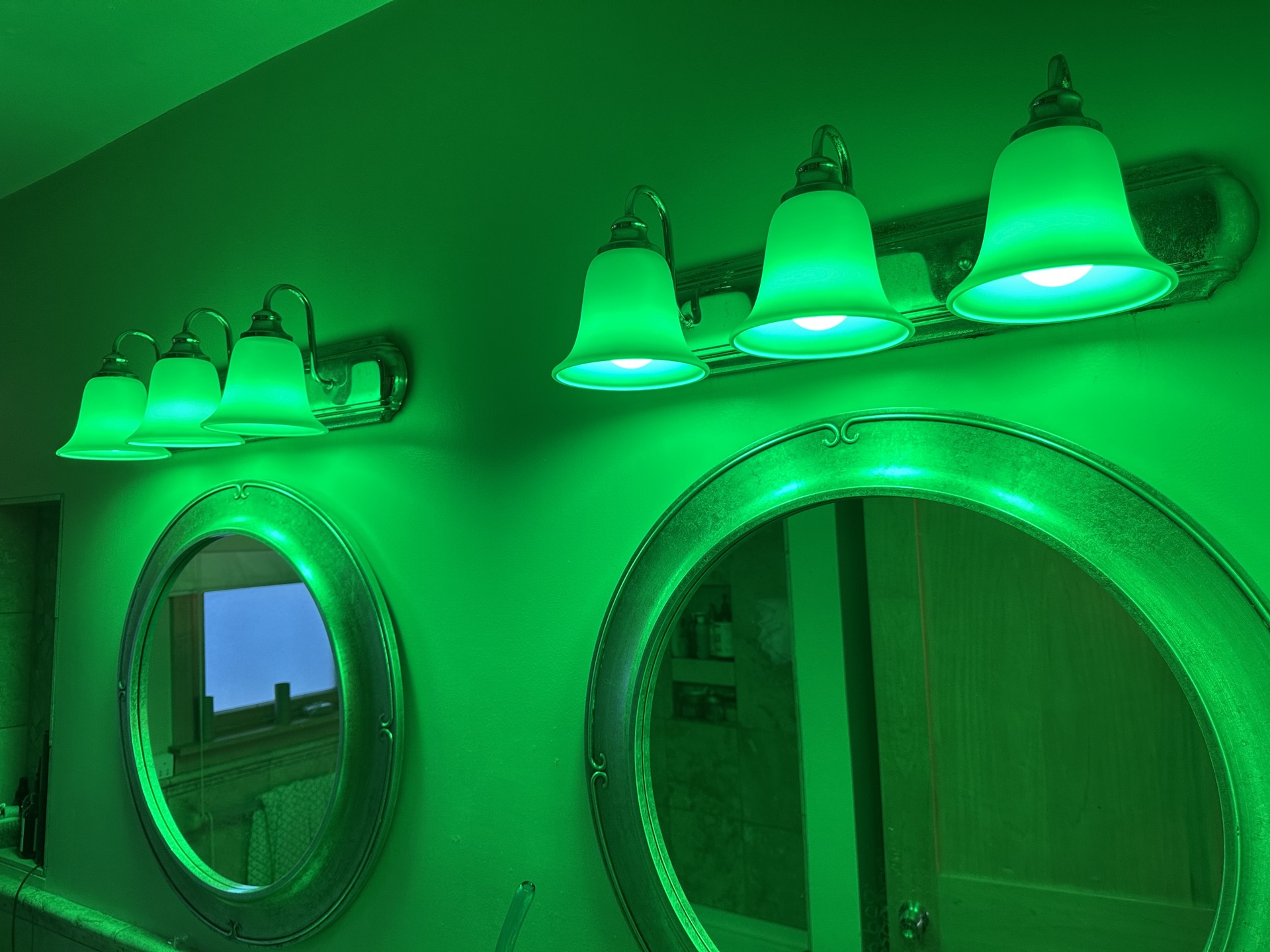
There's a specific flavor of humility only a smart home can deliver, and for me it showed up at the bathroom vanity.
I'd been wanting to play with Matter, so I picked up six new bulbs for the front bath — three over each sink. On paper it was everything home automation promises. I could control them individually, in groups of three as "left sink" and "right sink," or all together as "vanity." And — I was sure I'd done this right — I'd preserved every affordance the household already knew. The same wall switches we'd been flipping for years were still right there. Worst case, I told myself, you flip the switch and the lights come on. Belt and suspenders.
...
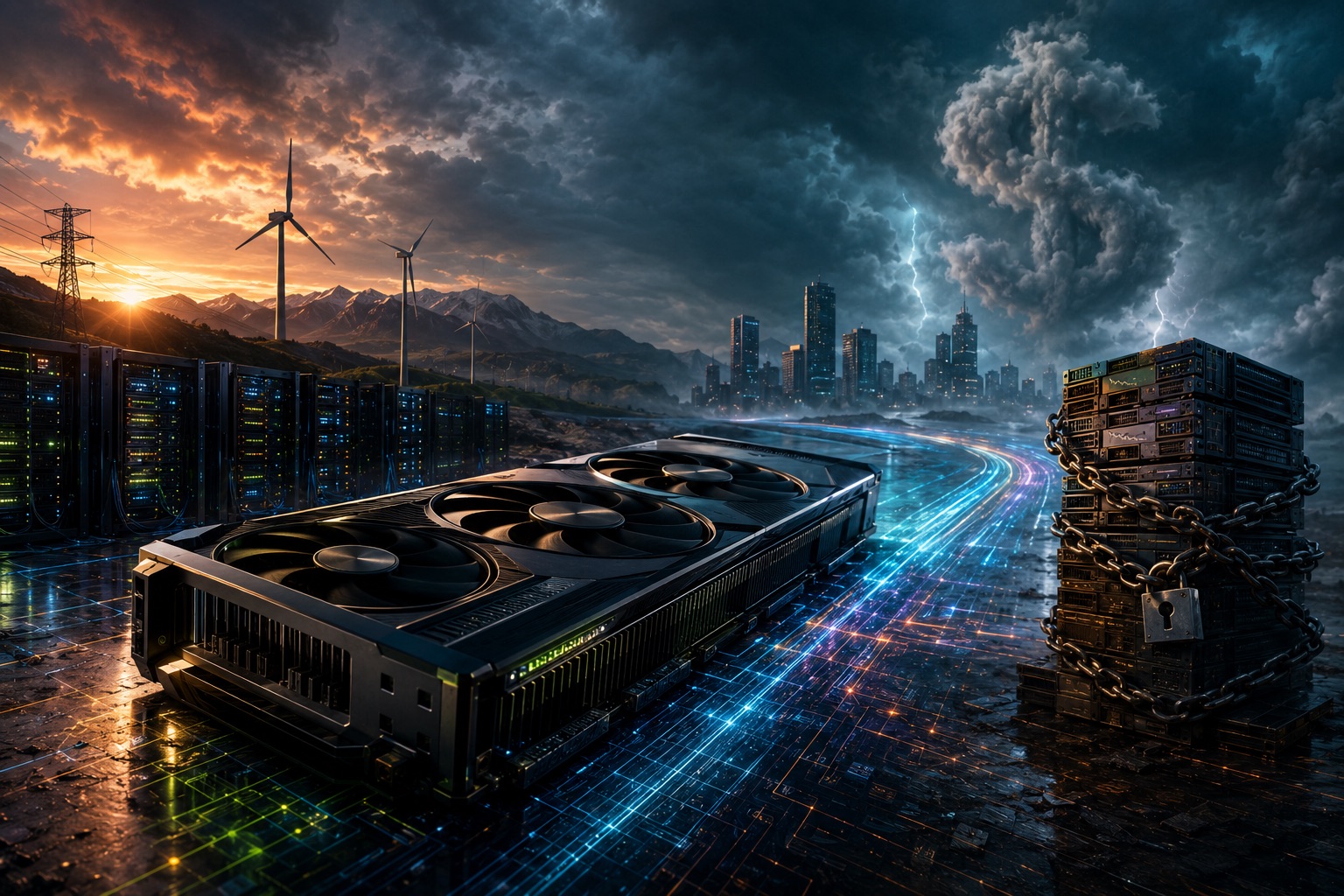
AI Compute Is a DER, Not a Crisis
The dominant framing of AI's collision with the grid goes something like this: AI compute is exploding, hyperscaler load curves are climbing into territory utility planners didn't sketch a decade ago, and the response is supply-side. Build more generation. Expedite interconnections. Hope the grid catches up. Almost every recent industry headline reads from this script.
It's not wrong. It's just incomplete.
The framing treats AI compute as fixed demand. The premise is that whatever energy the GPUs need to keep doing their space heater trick, the grid has to deliver. From there, every conversation is about supply: how to bring more on, how fast, with what generation mix, at what cost. The grid is the variable; the load is the constant.
...
Four Kinds of 'Multi-': One Free, One Yes, One Maybe, One Almost Never
The vocabulary of "multi-X" gets thrown around loosely in cloud architecture conversations, and four different things end up conflated into one. Multi-AZ, multi-account, multi-region, multi-cloud — they sound related but they aren't really. They have different costs, different benefits, and different prerequisites. They deserve to be evaluated separately.
Multi-AZ: the resilience pattern you mostly get for free It's worth naming what the cloud gives you almost by default — and what corporate on-prem data centers historically didn't. A modern cloud region is a cluster of independent availability zones, typically three or more, each its own physical data center with its own power, network, and cooling. The major managed services — databases, load balancers, queues, object stores, even Kubernetes control planes — are designed to run across AZs. Active-active-active across three AZs is the cloud-native default, not an architectural achievement.
...
Printing Tesla Accessories in ASA
Most of my recent print queue has been Tesla accessories. There's a particular satisfaction in printing parts you'll then use every day — the design gets evaluated by daily wear, road heat, sun exposure, and an honest read on whether it was worth the spool. Tighter feedback loop than most hobby printing.
A few of the recent prints, all in ASA:
Adapter locking rings. A small ring that secures your charging adapter to the J-1772 cable such that it can't be disconnected while you're inside the store. The first time you print one and use it, you wonder how the adapters ever shipped without integrated locks. Tiny part, real-world utility, and an obvious example of the community closing a gap a vendor left open.
...
The Daemon Moves Out: Why MCP Was the Wrong Home for the Pipeline
Five months after the manual-to-MCP pivot, I noticed the MCP server was doing two different jobs. One was a tool surface for an agent — the task for which I'd designed and built the MCP server. The other was the hosting environment for the daemon itself: long-running, stateful, with a job queue and a state machine that wanted to live longer than any single Claude Desktop session.
For most of those five months, the two jobs sharing one process was fine. Then it wasn't.
...
Building a Personal Daemon: Why the Manual Pipeline Lasted One Day
"The personal daemon was a semi-autonomous piece of software that lived in your system and acted as your agent, going out into the Cloud to do things for you." — Neal Stephenson, Fall, or Dodge in Hell
I have been quietly drowning in feeds for years. Not in a productive way — in the "I have 47 tabs open and three of them are arXiv" way. AI research, cloud infrastructure, smart-grid news. Each domain moves fast enough on its own; together they generate more credible signal than any one human can absorb.
...